Cinelicious founder Paul Korver provides a tour of the Historic Kodak Building – where Cinelicious has its new offices.
Cinelicious tapped to scan Universal / Blumhouse Feature BLACK PHONE 2
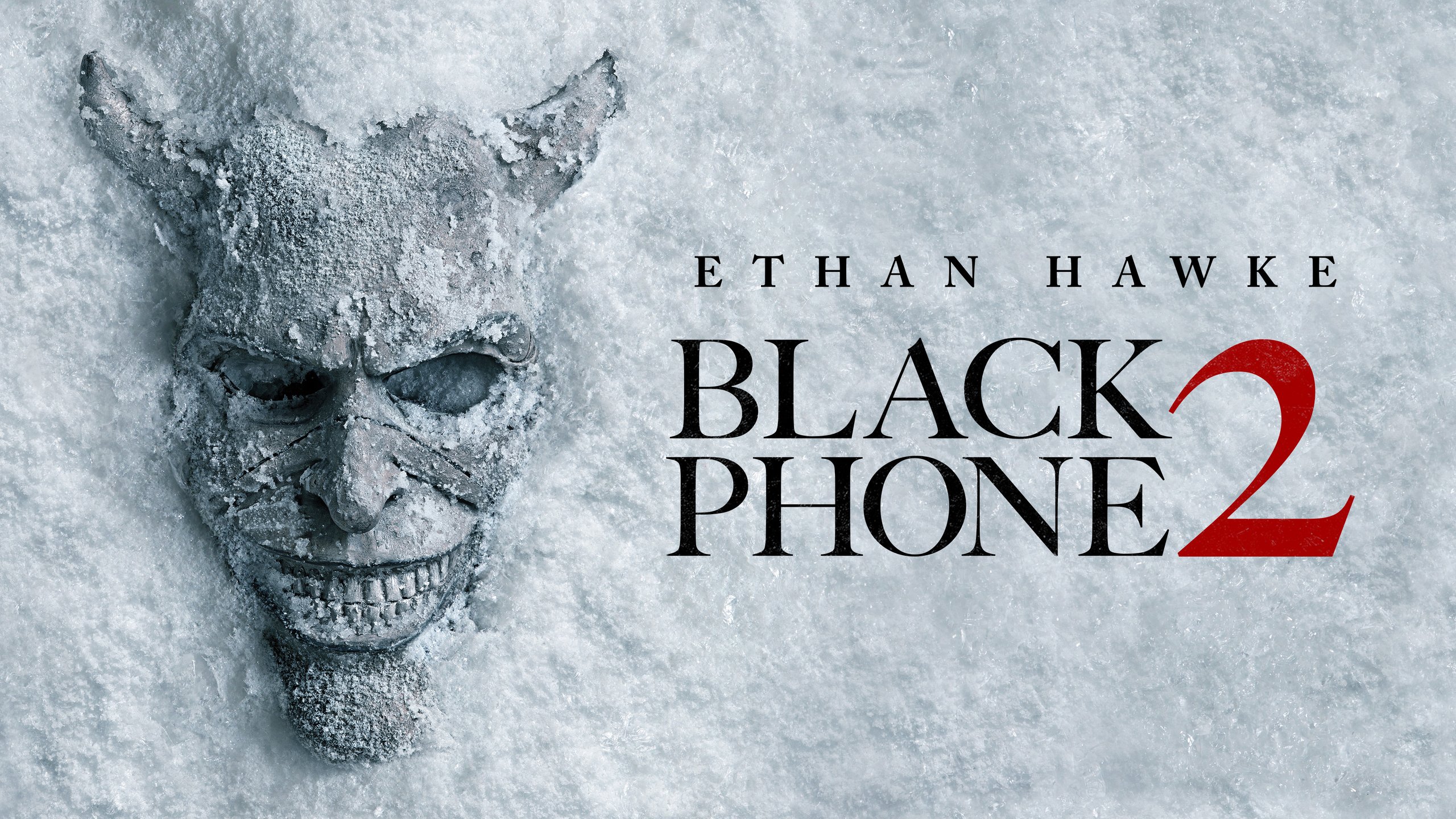
Continuing the collaboration that began with director Scott Derrickson’s 2012 film Sinister – Cinelicious again provides high resolution, “scan-once” HDR Super 8mm & 16mm film scanning for Blumhouse / Universal horror franchise The Black Phone starring Ethan Hawk as The Grabber. Cinelicious worked with DP Pär Ekberg on technical aspects of pre-production camera testing & employed new ultra high resolution digitation techniques to support the creative DI color work of Joseph Bicknell at CO3 NY. The Super 8mm was used to create an unsettling feeling to Gwynne’s psychic dream sequences. Approximately one third of the film was shot on Super 8mm and 16mm. Watch the trailer.
Cinelicious “Digital to Film” Process for Apple TV’s THE GORGE
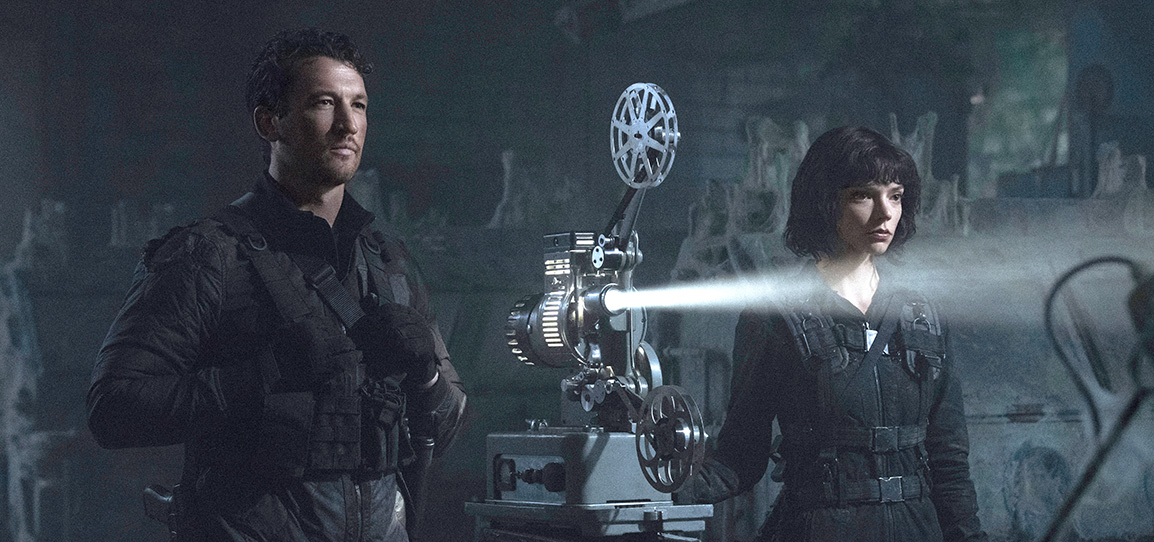
Skydance and Crooked Highway collaborate on genre-mixing thriller The Gorge for Apple TV. Cinelicious was called on to create a beat-up, archival, 16mm film print that the main characters (played by Miles Teller and Anya Taylor-Joy) discover in a long-forgotten WWII-era laboratory. The print needed to feel like it was distressed and age-appropriate for the story. The physical film reel was used as a prop on set and actually projected while filming the scene, providing a key plot point to unlock the mysteries of The Gorge. Cinelicious used a combination techniques to achieve the final 16mm print: Scanning Super 8mm shot on set, then using a “Digital to Film” process where the digital Super 8mm scans were shot out to 16mm, then physical aging / distressing of the resulting 16mm print. Click here to a see short sample clip (no spoilers).
Christopher Nolan taps Cinelicious for 4K Scan of FOLLOWING
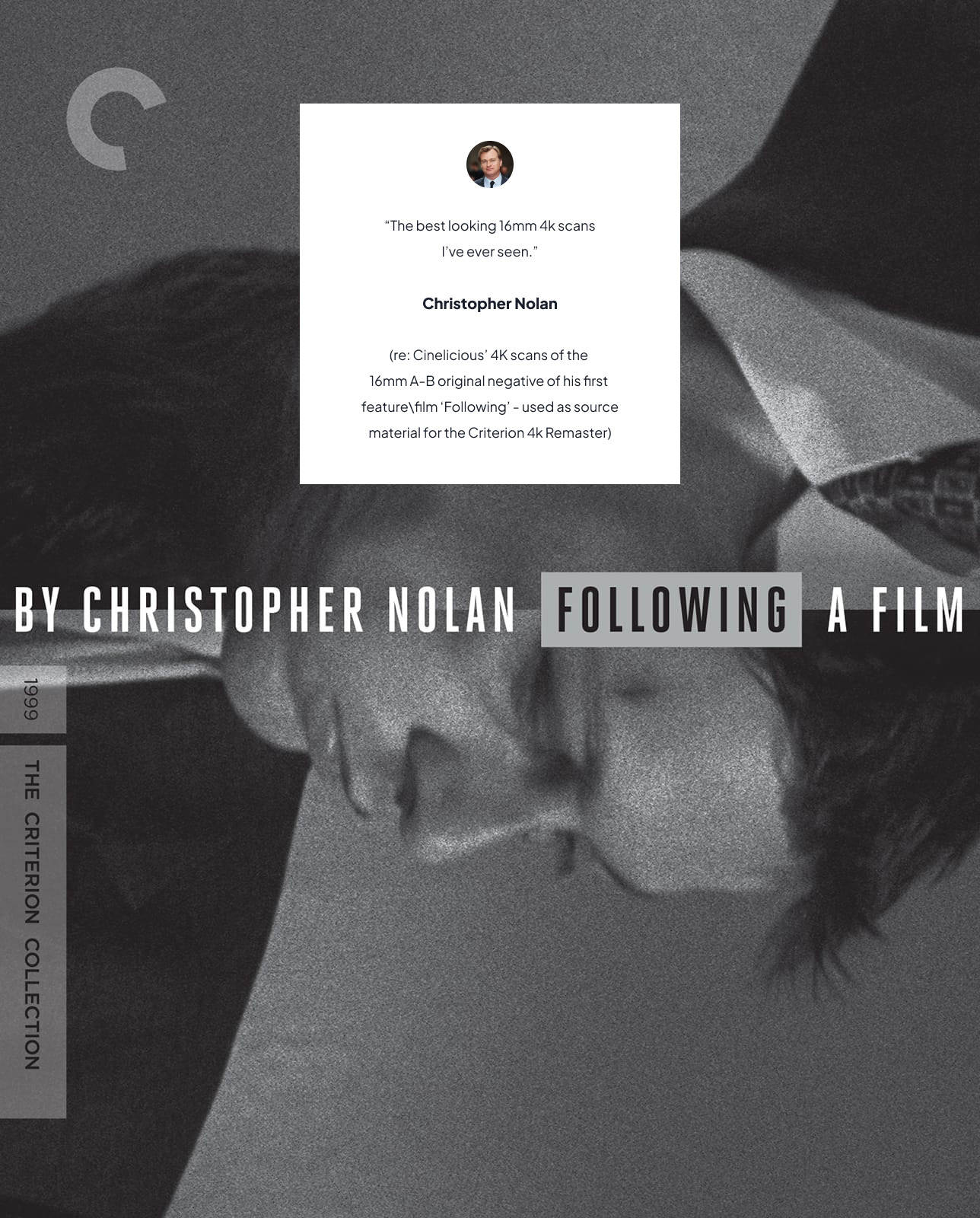
Christopher Nolan needed flawless 4K scans of the original B/W A-B negative of his first feature Following for a high-profile restoration and Criterion release. But every major post house he tried delivered scans with blurred frames around the splices—until Lee Kline (technical director at Criterion) asked us to take a shot. We love a good technical challenge, and this one paid off: we solved the issue, landed the project, and earned Nolan’s praise—“Cinelicious provided the best 4K 16mm film scans I’ve ever seen.” Thanks, Chris—for the kind words and for always championing the art of shooting on film. Watch the trailer.
Remote Color Grading for WYNN LAS VEGAS

Cinelicious has recently launched our Remote Color Grading services allowing clients to experience final color sessions from anywhere in the world. Wynn Las Vegas has an extremely talented in-house production team. From camera & cinematography to vfx and editorial they produce much of their promotional materials entirely in-house. One area that they needed help with was final color so when a producer from Wynn called saying they needed help on a golf spot we were a perfect fit. Check out the finished spot here.
PRIVATE PROPERTY, A Gripping Noir Finally Gets Its Due
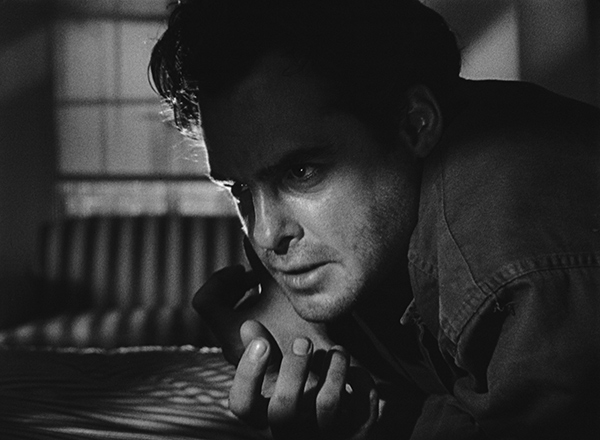
Leslie Stevens’ 1960 film noir Private Property is an incredibly tense psychosexual thriller that is years ahead of its time.
 By Josh Hurtado
Stevens was probably best known as the creator of the influential science fiction TV series The Outer Limits, but before that project got off the ground in 1963 he was a writer and director of a couple of feature films that didn’t exactly set the world on fire. Private Property was his first in the director’s chair and it is definitely a bold debut, even if audiences in the US didn’t get to see it at the time.
Duke (Corey Allen) and Boots (Warren Oates) are drifters making their way down the Southern California coast when they spy a pretty young woman zooming down the freeway. After following her for miles and discovering that next to her house is an empty one, they decide to have a little fun and insinuate themselves into her life.
The young woman, Ann (Kate Manx), is a frustrated housewife left alone all too often by her salesman husband, who is at first hesitant at Duke’s attention, but before too long begins to succumb to his greasy, salt-of-the-earth charm. However, when the pair of men with ulterior motives take their admiration a step too far, things all go pear shape in a shocking way.
Private Property is a film about longing, not the romantic kind, but the lustful kind that manifests itself sometimes in very aggressive ways. There is the longing of Duke, the greasy drifter who sees Ann and can’t help but imagine himself doing horrible things with her. There is the longing of the virginal Boots, who has never been with a woman and cannot stand to be barren for much longer.
There is even, and perhaps most glaringly, the longing of Ann, a frustrated housewife who tries again and again to seduce her clueless absentee husband, but who is rebuffed at every turn. This simmering cauldron of lust has no choice but to reach a boiling point at which the whole thing bubbles over, and the climax of Private Property is astonishingly perverse in its execution.
While Private Property is notable as the first film of Warren Oates, one of Hollywood’s greatest character actors, it is really Corey Allen who drives the film and controls its atmosphere. Allen, who is probably best known as the heel in Nic Ray’s Rebel Without a Cause, is a seething beast of pent up lust and aggression. His ability to morph from this carnal monster into a loquacious, charming confidant to Ann’s abandoned housewife is remarkable. He controls every situation he’s in like a conductor with a symphony, and when he tells the film to play louder, it’s almost deafening.
Oates, on the other hand, is a taciturn, frustrated man-child in his role as Boots. His inability to boast of his sexual conquests has scarred him deeply and his partnership with Duke has grown deeper over the years as Duke has sheltered and protected his friend. The relationship is quite similar to that of Lenny and George in John Steinbeck’s Of Mice and Men, though considerably more sinister in its trajectory. Boots isn’t the gentle giant, he’s a dangerously violent man, whose instability is the monster that Duke must quell. It’s not Oates’ finest performance, but he does a great job with the material he’s given.
The third member of this triangle is Kate Manx’s Ann. Manx was director Leslie Stevens’ wife at the time, and I can only imagine what that set must’ve been like as Stevens’ directed her in these scenes of increasingly volatile sexual aggression. She plays the waif to Duke’s beefcake with a certain sense of naivete mixed with the classic mid-century sense of duty care for this man who is down on his luck.
She’s no fool, but she’s also not bold enough, or perhaps she’s not entirely eager, to wave off Duke’s admirations, even if to her they are just harmless flirtations. When Duke begins to take things farther, she protests, but not too vociferously, until she’s finally reached her limit, at which point Duke’s facade crumbles and she realizes her life could be in danger.
The sexual politics in Private Property are fascinating. Duke and Boots hunt Ann as though her sex was their right. Ann establishes herself as a sexual being from the outset of the film, even though she is continually ignored by her chosen mate. The power moves back and forth between the men and Ann as she is first wary of them and later begins to enjoy Duke’s attention, if only in a flirtatious way.
America wasn’t ready for Private Property in 1960, but they are now, and it’s one of the greatest discoveries of 2016.
From martial arts to mumbling cowboys: The best re-released and restored films of 2016


By Ignatiy Vishnevetsky
Movie culture has always been sustained by rediscovery and revaluation—that infinite process of expanding and redefining canons. There are two important factors at play here. The first is that film spread and developed faster than any creative medium that preceded it, meaning that the bulk of what survives of film history is still unexplored. The second is that film has always been a business, and that its commercialization can make release patterns and availability into tricky processes. Every year, some set of rights is finally negotiated or some negative is found after decades in a closet.
Our coverage of the best of the year can’t overlook the “new old” movies—the ones that are finally enjoying a much needed push or have just become available to the wider public. These are eight of the essential items that saw restoration or re-release this year. A caveat: This is a personal guide, beholden to nothing except my own tastes (for one, I’m not crazy about River Of Grass, one of the year’s high-profile indie re-releases) and interests.
A psychosexual freak-out of fairy-tale subtexts and obscene imagery, Belladonna Of Sadness stands as one of the most unusual and challenging animated features of its time—no small feat, given that its contemporaries include René Laloux’s Fantastic Planet and the early films of Ralph Bakshi. Directed by Eiichi Yamamoto, a close collaborator of the Japanese comics and animation legend Osamu Tezuka, in an array of limited animation styles that draw on art nouveau and expressionism, the film draws on the French historian Jules Michelet’s theories of witchcraft as a form of rebellion to create an anti-authoritarian parable of sex magic and sexual violence in medieval France. A commercial failure in its time, the film had never played American theaters before this year’s 4K restoration; it has since been released on Blu-ray and DVD.
FUNERAL PARADE OF ROSES 4K RESTORATION – FIRST LOOK
A peek at the some of the 4K scans for our upcoming restoration of Toshio Matsumoto’s FUNERAL PARADE OF ROSES. To say they look stunning would be an understatement. Wow.
You can follow the restoration work on our dedicated tumblr page.


Cinelicious Pics to Release 4K Restoration of Lost Noir ‘Private Property’


By Zack Sharf
Cinelicious Pics has announced plans to distribute a new 4k restoration of the long-lost 1960’s noir “Private Property.” The movie is directed by Leslie Stevens and stars American character actor Warren Oates in his first significant screen role. The 4k restoration will have its world premiere at the 7th Annual TCM Classic Film Festival, which runs from April 28-May 1 in Hollywood.
The official synopsis reads: “‘Private Property’ begins as two homicidal Southern California drifters wander off the beach and into the seemingly-perfect Beverly Hills home of an unhappy housewife. Shimmering with sexual tension and lensed in stunning black and white by master cameraman Ted McCord, ‘Private Property’ is both an eerie, neo-Hitchcockian thriller and a savage critique of the hollowness of the Playboy-era American Dream.”
“I was completely bowled over by the film,” said David Marriott, Cinelicious Pics’ Director of Acquisitions, in an official statement. “A sort of hothouse late-period film noir, ‘Private Property’ is deeply bizarre and incredibly compelling. Considering the talent involved – director Stevens, cameraman Ted McCord, actor Warren Oates – it’s very rare to rediscover a completely lost crime film like this.”
“We’re thrilled to be showcasing a discovery of this caliber at the TCM Classic Film Festival,” added Charles Tabesh, senior vice president of programming for Turner Classic Movies (TCM). “Our mission at TCM is to bring audiences great classic films and to help them discover unknown classics, such as ‘Private Property.'”
The film had a very brief theatrical release in the 1960’s but has been lost ever since. The title joins other Cinelicious restorations, including “Belladonna of Sadness.”
This Porn-y 70s Film Is a Mind-Melting Head Trip About a Witch and a Tiny Talking Penis


By J. W. McCormack
The 1970s were perhaps the grossest chapter of recorded time, an era wherein the previous decade’s flower power rotted on the vine and a politically engaged, protest-minded youth culture dissolved into an atmosphere of distinctly hostile decadence. By the time The Joy of Sex, with its illustrations of hairy fornicators, arrived on shelves in ’72, sexual freedom had more or less given way to wanton Henry Miller–esque rutting. But for all its prurience, the decade that gave us Deep Throat, Hustler, and Plato’s Retreat was also the last time when widespread experimentation dominated the mainstream in every corner of the arts, from the creator-driven films of the New Hollywood and rock ‘n’ roll’s enshrinement of the drug culture in the popular imagination to the spectacle of perfectly normal people reading Gravity’s Rainbow. It was also the golden age of cartoon sexuality: Adult animator Ralph Bakshi followed the success of the X-rated Fritz the Cat with burned-out, bell-bottomed exercises in hand-drawn hallucination like Coonskin and Wizards, and the magazine Heavy Metal cornered the market for large-bosomed women riding dragons and beating the shit out of pervy robots.
But the greatest legacy of the 1970s vogue for melding Saturday morning cartoons with Saturday Night Fever was in Japan, where anime succeeded the pornographic “pink film” in marrying transgressive and—especially in the case of hentai—graphic sexual content with eye-popping psychedelic excess. The genre’s first masterpiece was Belladonna of Sadness (Kanashimi no Beradonna), a film that has a visual style so sui generis that I can only compare it to Sesame Street if Sesame Street were, as my paternal grandmother believed, a recruiting film for LSD-addled freakazoids and the Church of Satan.
When Belladonna of Sadness was originally released in 1973, it immediately bankrupted its studio, Mushi Production. Mushi had been founded in the early 60s by manga artist Osamu Tezuka, the creator of Astro Boy and Unico, and its style was largely responsible for establishing the frenetic big-eyes-small-mouth aesthetic of anime. But Belladonna actually has more in common visually with Aubrey Beardsley, Yellow Submarine, and the Tarot-card-looking output of the illustrator Kay Nielson. It’s like Bakshi at his trippiest. But here I am talking like this is not a film that features a long scene of flora and fauna—giraffes, crocodiles, orange trees, you name it—emerging from people’s orifices like something out of a Boschean Hanna Barbara, and, reader, that is precisely what I’m talking about.
The plot concerns a purple-haired witch named Jeanne and her seduction by the devil, inexplicably disguised as a little talking penis, who grants her supernatural powers. The remaining story line, if you can call it that, largely consists of Jeanne’s arcane revenge on the nobles responsible for her violent sexual assault (in a ghastly early sequence that’s made even more uncomfortable by her attacker’s striking resemblance to Hordak from the old She-Ra cartoons). The film is a Joan of Arc pastiche, a musical, an exploitation picture, and a pornographic movie—but what it really is is an excuse for a breathtaking series of montages where a singing, dancing Black Death melts faces into skulls, kaleidoscopic specters of pop-art Americana signify the consummation of Jeanne’s pact with the Evil One, and an assortment of infernal penises perform vicissitudes previously undreamt by any human penis, which is perhaps the greatest contribution an animation studio has made to creative physiology since Cab Calloway serenaded Betty Boop in Minnie the Moocher.
Read the full article at Vice.com
Belladonna of Sadness will screen on May 6 at Metrograph and Alamo Drafthouse in New York and San Francisco, respectively, and May 13 at the Cinefamily in Los Angeles. For a full listing of theater locations please visit Cinelicious Pics.
Cinelicious Pics is holding a promotional art contest in support of their release. $1000 top prize! Entry deadline is April 1st (no fooling!)